-
1
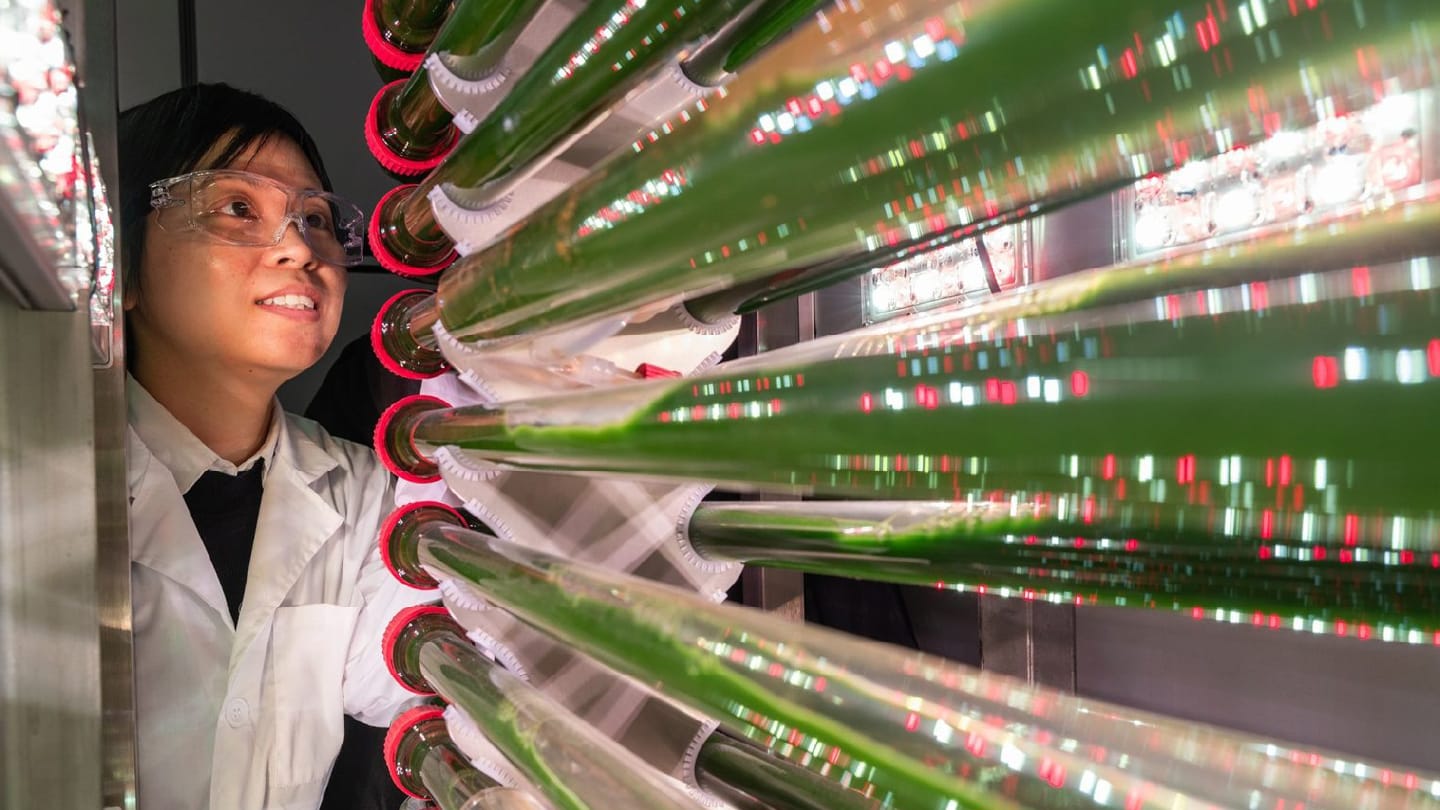
Genetically modified algae captures microplastics.
-
2
Produces limonene, a water-repellent oil.
-
3
Clumps microplastics together for easier removal.
-
4
Improves water quality by feeding on excess nutrients.
-
5
Processed biomass can become benign bioplastics.
Original Source(s)
Sticky Situation; Sticky Solution
Image of the Month: engineered algae aggregating microplastics
February 20, 2026
-
1 min
Related Content
UK: More than a Million Over 40s Living with Glaucoma
New modeling data estimate higher glaucoma prevalence in the UK, with cases expected to increase over the coming decades
February 20, 2026
-
3 min

How Lead Exposure Changed Over a Century
Hair-based mass spectrometry links declining lead exposure to environmental regulation
February 17, 2026
-
2 min

PFAS Enters its Big Data Era
Jennifer Field explores new frontiers in the fight against PFAS: mining big data, tracing volatile emissions, and probing fluoropolymers through biomimetic tools
February 17, 2026
-
18 min