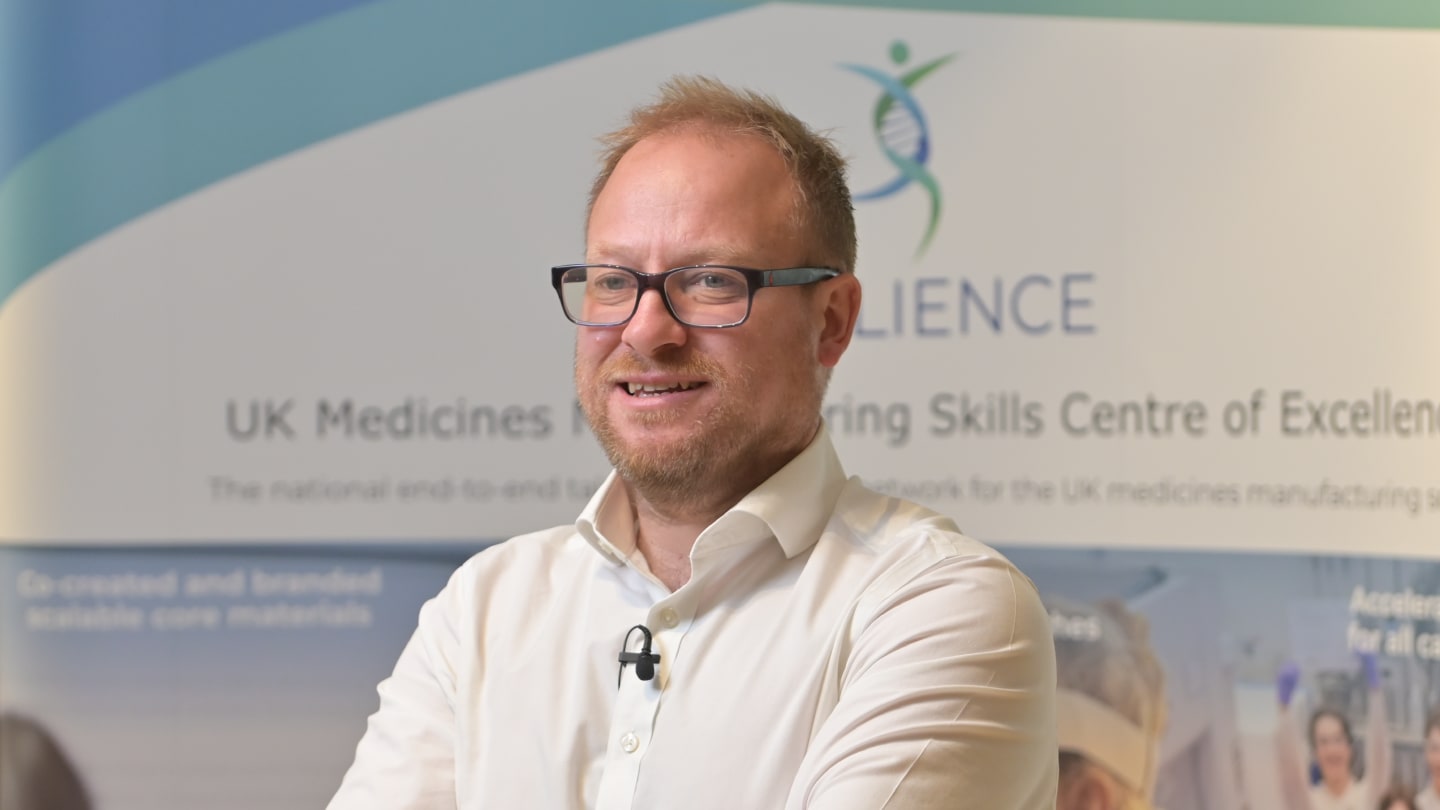
Training the Medicine Makers the UK Can’t Afford to Lose
-
By
February 12, 2026
-
6 min
Professor Ivan Wall examines the critical skills gaps in the UK life sciences sector, emphasizing the role of virtual reality (VR) in addressing these challenges through innovative training solutions. As the UK strives to become a leading life science nation by 2030, it faces significant hurdles, including a decline in clinical trials and stalled investments from major pharmaceutical companies. VR is posited as a more scalable, cost-effective training method, allowing trainees to gain hands-on experience without the logistical difficulties of traditional labs, thus enhancing their readiness for the workforce.
1. Skills gaps in the UK life sciences sector hinder progress. 2. 41% decrease in clinical trials from 2017 to 2021. 3. VR training offers scalable and cost-effective solutions. 4. RESILIENCE program has engaged thousands in training. 5. UK aims for top ranking in life sciences by 2030. 6. VR allows repeated practice without material waste. 7. Industry feedback is crucial in developing effective training programs.
Listen Tab content