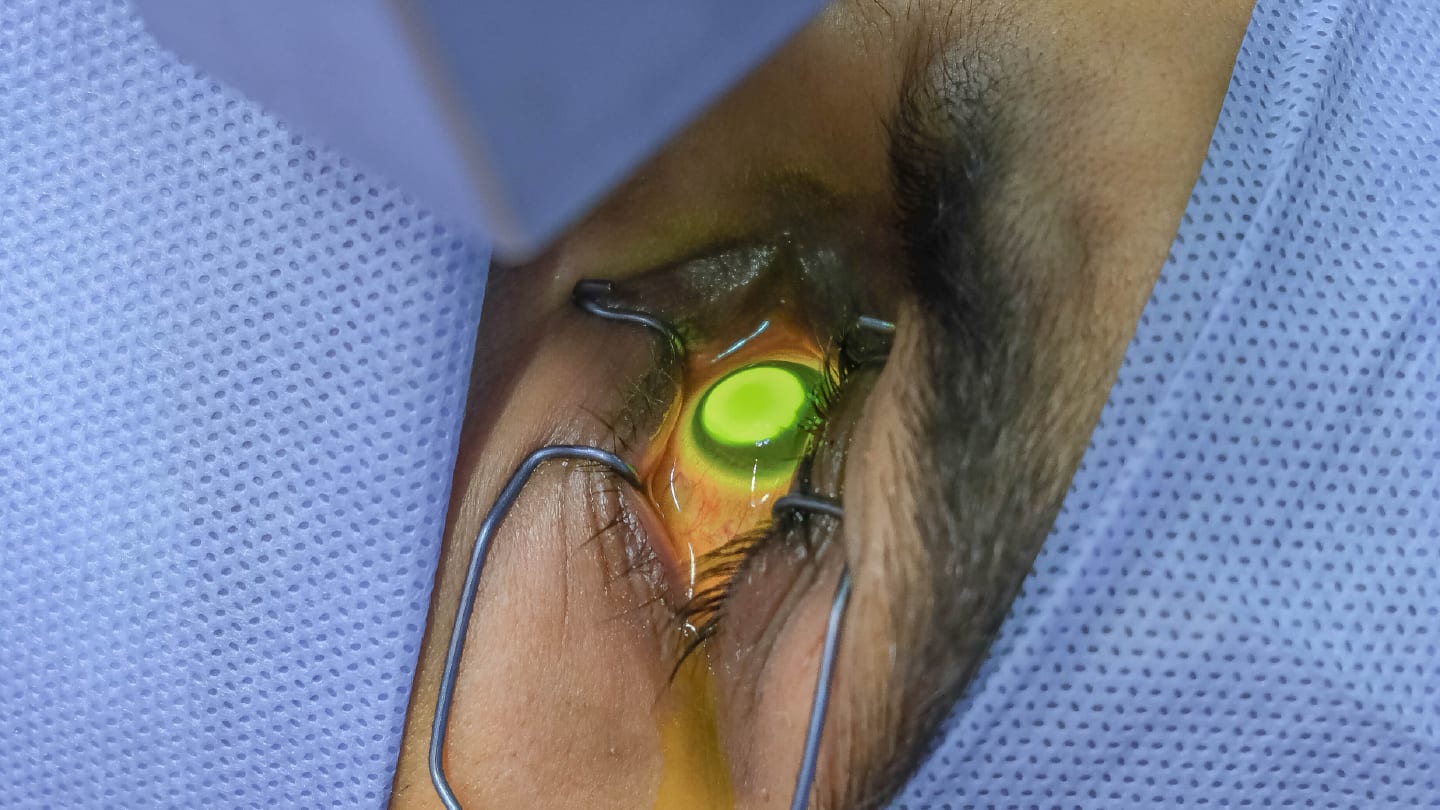
Personalizing Corneal Cross-Linking
-
By
January 12, 2026
-
7 min
-
1
- CXL has moved from a fixed to a personalized approach for corneal ectatic diseases. - Epi-on CXL minimizes pain and infection risk while maintaining epithelial integrity. - Corneal optimization improves biometric accuracy in keratoconus patients before cataract surgery. - Customized CXL techniques enhance stability and visual outcomes for irregular corneas. - Current protocols emphasize tailoring treatment to patient-specific needs and circumstances.
-
Corneal cross-linking (CXL) has transitioned from a standardized protocol to a personalized treatment, aligning with advancements in corneal understanding. This evolution is evident in three clinical scenarios: prioritizing safety in patients with good vision through epi-on CXL; enhancing outcomes in keratoconus cataract patients with corneal optimization; and addressing markedly irregular corneas through customized CXL combined with laser enhancement. Such personalization improves corneal stability and visual quality, reflecting a shift towards tailored ophthalmic care.
-
1
- CXL has moved from a fixed to a personalized approach for corneal ectatic diseases. - Epi-on CXL minimizes pain and infection risk while maintaining epithelial integrity. - Corneal optimization improves biometric accuracy in keratoconus patients before cataract surgery. - Customized CXL techniques enhance stability and visual outcomes for irregular corneas. - Current protocols emphasize tailoring treatment to patient-specific needs and circumstances.
Listen Tab content